Even though I’ve done a lot of development on web and mobile apps, I haven’t interacted much with integrated circuit designs. Back in semester 2, we did a microprocessor project for Computer Organization and Digital Design. That was really interesting and went deep into designing complex processors. I learned a lot from it using FPGA with Vivado, but we didn’t do simple or fun little projects with Arduino. Sure, I changed some Arduino code before, but I didn’t really learn from it.
Many of my friends are into different kinds of projects-they write about them, share them, and talk about them. That got me curious, and I wanted to explore similar projects myself.
This blog is about one of my first hands-on experiences with Arduino. I also have another interest-cybersecurity-which I’ll write about in a separate blog soon.
Right now, I’m learning and experimenting with the Arduino Uno board, and the cool part is I can simulate my projects online using Wokwi. It’s super convenient for testing ideas without wiring everything physically.
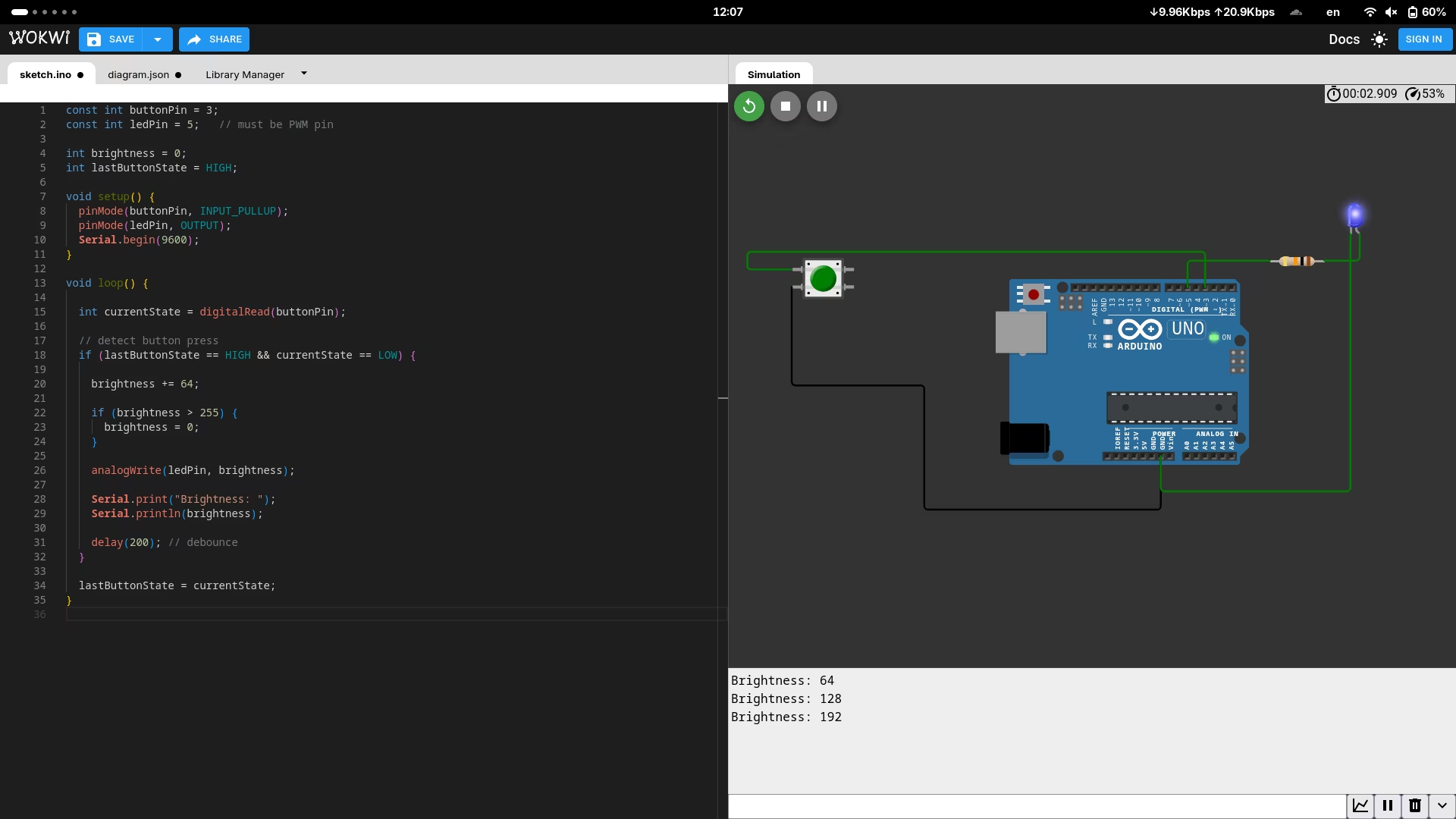
Multi-Level Brightness Control
Here’s what I tried in this project:
- PWM (Pulse Width Modulation) – controlling LED brightness at multiple levels.
- State logic – to manage different brightness states smoothly.
- Button edge detection – instead of using
delay(), I usedmillis()for non-blocking button handling.
I won’t go into every detail here, but I have to say-it was way easier to learn with a bit of AI guidance than by watching a long YouTube tutorial like “Learn Arduino from A to Z.” Anyone can try this; you just need a little English and some curiosity!
Arduino is fun because you can experiment, make mistakes, and learn by doing. I’m excited to explore more projects and share them here. Stay tuned for the next adventure!